Do you picture sunrise over breaking surf or sunset shimmering across calm river water? Choosing between oceanfront and Intracoastal living in Vilano Beach is exciting, but it comes with different costs, risks, and lifestyle trade-offs. You want the right fit for how you live today and how you plan to own tomorrow. In this guide, you’ll compare both sides by lifestyle, maintenance, insurance, risk, and resale so you can move forward with confidence. Let’s dive in.
Vilano Beach at a glance
Vilano Beach sits on a narrow barrier between the Atlantic Ocean and the Intracoastal Waterway/Matanzas River just north of historic St. Augustine. This barrier setting creates two distinct waterfronts: direct oceanfront exposed to waves and beach conditions, and a protected river side with calmer water. Both sides share easy access to St. Augustine’s dining, healthcare, and cultural attractions, plus plentiful beach, boating, and fishing options.
Because land is narrow, access, parking, and seasonal traffic can influence daily convenience and rental potential. For local services, permitting, and coastal updates, start with the St. Johns County official site.
Oceanfront perks and trade-offs
Oceanfront homes deliver the classic beach experience: direct sand access, expansive views, and a premium coastal lifestyle. Morning walks, surf fishing, and the sound of the waves are part of daily life. Oceanfront properties also tend to be scarce, which often supports higher price premiums per square foot.
The trade-off is exposure. Oceanfront parcels face direct wave action, beach erosion, and salt spray. Maintenance and insurance can be higher, and you will want to understand dune health, beach management plans, and any local nourishment or restoration efforts before you buy.
Intracoastal perks and trade-offs
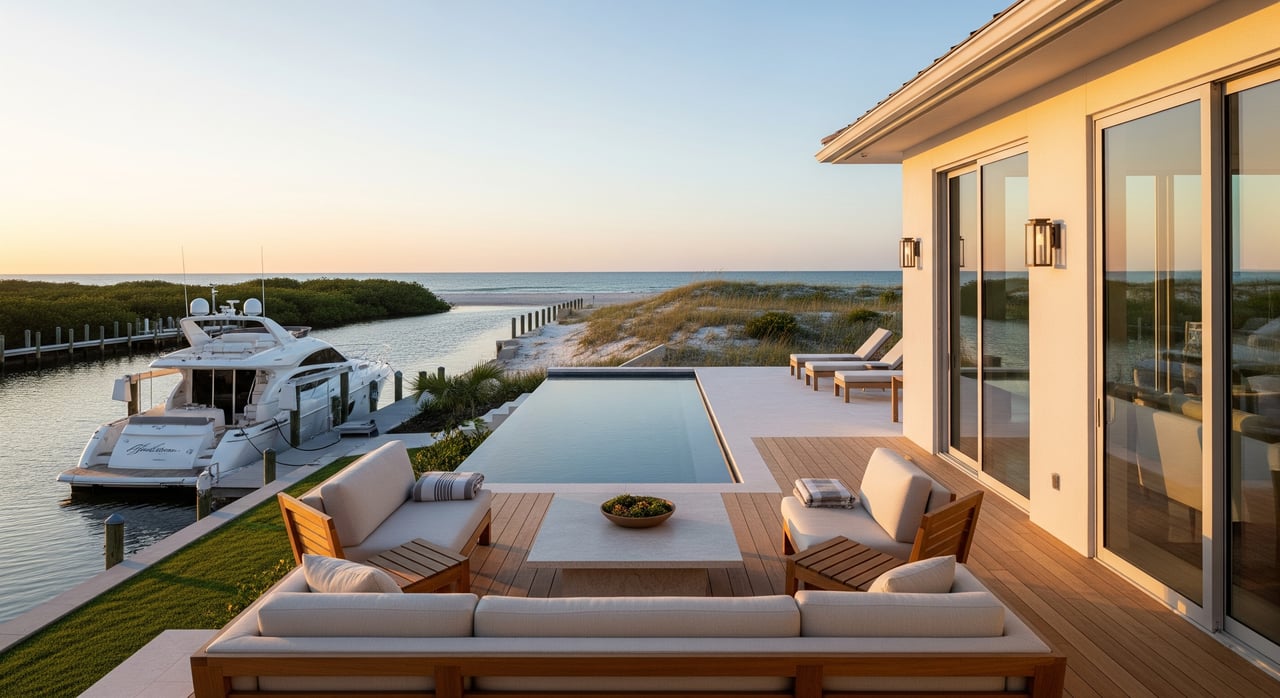
Intracoastal homes typically offer calmer water, private dock potential, and easier boating for fishing, kayaking, and paddleboarding. You often get sunset views, wildlife sightings, and a more sheltered shoreline feel. Some parcels may be larger or offer deeper water access, which many boaters value.
The trade-off is that intracoastal properties are still coastal and can experience tidal flooding and storm surge. You may also have dock and seawall upkeep, navigational depth to verify, and occasional boat traffic and wakes to consider.
Market dynamics and resale
In most coastal markets, direct oceanfront commands the highest per-square-foot values due to limited supply and unobstructed views. Intracoastal homes usually price below direct oceanfront but remain premium waterfront thanks to boating access and livability. Lot elevation, structural condition, presence and condition of docks or seawalls, and local protections can shift premiums on either side.
Liquidity and resale also reflect risk perception. Oceanfront’s scarcity can help resale, while concerns about erosion and insurance may narrow the future buyer pool. Intracoastal homes may feel more resilient to some buyers because they avoid direct surf exposure, yet they still sit within surge and flood risk. For parcel-level data and historical records, consult the St. Johns County Property Appraiser and review current local comps before making an offer.
Risk, rules, and insurance
Flood zones and surge exposure
Both oceanfront and intracoastal parcels can be in FEMA Special Flood Hazard Areas. Oceanfront lots often fall in coastal high-hazard classifications and can face direct wave impact. Intracoastal lots can still flood during surge and king tides. Always verify a property’s FEMA flood zone using the FEMA Map Service Center and review site elevation with a recent elevation certificate.
To view possible future water levels and storm interactions, explore the NOAA Sea Level Rise Viewer. Use these tools together to understand today’s risk and how long-term changes may affect access, utilities, and insurability.
Erosion and beach management
On the ocean side, beaches naturally shift. Some areas periodically undergo dune restoration or nourishment led by local or state agencies. These projects can influence property stability, beach width, and potential cost-sharing or assessments. Learn about state coastal programs and permitting through the Florida Department of Environmental Protection’s Beaches and Coastal Systems, and monitor regional project updates from the U.S. Army Corps of Engineers.
Building standards and permits
Florida applies strict coastal construction standards, including elevation, wind resistance, and foundation rules in high-hazard zones. If you are considering renovations or new construction, confirm how the structure aligns with current requirements and whether upgrades may be triggered by the scope of work. Review statewide standards via the Florida Building Code, and coordinate local permitting with St. Johns County.
Insurance costs and availability
Coastal insurance is a specialized budget line, and it varies by elevation, flood zone, and structure. Lenders usually require flood insurance in FEMA Special Flood Hazard Areas. Explore coverage specifics and eligibility through the National Flood Insurance Program. Beyond flood, wind and hurricane coverage is separate and often priced higher on the coast. For market conditions and consumer guidance, check the Florida Office of Insurance Regulation. In some cases, the state’s insurer of last resort, Citizens Property Insurance, may be relevant if private coverage is limited.
Lifestyle and maintenance
Daily life on the ocean
If you want to live by the tides, oceanfront is immersive. You get immediate beach access, surf sounds, and sunrise views. You may also experience more wind, salt spray, and seasonal foot traffic near public access points.
Daily life on the intracoastal
If you prioritize boating and calmer water, intracoastal offers a more sheltered feel. You can step onto your dock for a morning paddle or an evening cruise to dinner. Expect occasional boat wakes, marsh insects in warm months, and tidal changes that affect dock usability.
Maintenance and ongoing costs
Plan for coastal upkeep regardless of side. The specific checklist varies by shoreline:
- Oceanfront
- Dune care and beach walkover maintenance where allowed.
- More frequent exterior painting and corrosion control due to salt spray.
- Window, door, and hardware replacement cycles may be shorter.
- Intracoastal
- Dock, piling, and seawall inspection and repair.
- Monitoring for marine-borer damage where applicable.
- Potential dredging considerations near shallow channels.
- Both sides
- Impact windows or shutters, roof tie-downs, and proper elevation are key resilience features.
- HVAC and appliance corrosion prevention, plus dehumidification after storm events.
Due diligence checklist
Before you write an offer or list your home, confirm the details that most affect cost, safety, and resale.
- Flood zone and elevation
- Verify FEMA flood zone on the FEMA Map Service Center.
- Obtain or update an elevation certificate.
- Insurance
- Get quotes for homeowners, wind, and flood. Compare NFIP and private options using the National Flood Insurance Program as a starting point.
- Ask about prior claims and how they affect premiums.
- Structural and shoreline condition
- Inspect docks, pilings, seawalls, revetments, and dune health.
- Request records for past storm damage and permitted repairs.
- Permits, projects, and restrictions
- Confirm permits for docks, seawalls, and major improvements with St. Johns County and the Florida DEP for coastal work.
- Ask about beach nourishment plans or special assessments; the U.S. Army Corps of Engineers often provides project context.
- Zoning and HOA
- Verify zoning and permitted uses; for condos or HOAs, review reserves, insurance, and rental policies.
- Environmental overlays
- Determine if the site is within protected coastal zones, including the Coastal Construction Control Line.
- Access and utilities
- Confirm road access, parking limits, and whether the home is on public sewer or septic.
- Long-term risk and resale
- Use the NOAA Sea Level Rise Viewer to understand long-term exposure.
- Review parcel history with the St. Johns County Property Appraiser and speak with a local agent about recent demand.
Which side fits your goals?
Use your top priorities to guide the decision:
- Choose oceanfront if you value daily beach walks, unobstructed horizon views, and direct sand access above all. Budget for higher maintenance, possible erosion management, and potentially higher insurance.
- Choose intracoastal if you prioritize boating, dock access, calmer water recreation, and a more sheltered shoreline. Plan for dock and seawall upkeep and confirm water depth and navigation.
If you are torn, consider a test run with seasonal rentals on both sides. Your daily rhythm, not just the view, should lead the choice.
How The Newcomer Group helps
Waterfront decisions are personal and financial. You deserve clear guidance rooted in local detail. As a St. Augustine-based, team-driven brokerage, The Newcomer Group combines hyper-local market knowledge with proven systems to help you compare elevation, insurance, shoreline condition, and resale factors at the parcel level. For sellers, we pair premium presentation with market strategy to highlight the lifestyle and mitigate buyer concerns with well-documented due diligence.
Whether you are buying your first coastal home, securing a second home with a dock, or selling a legacy beachfront property, we help you prepare, position, and negotiate with confidence. When you are ready, connect with The Newcomer Group to talk through your plans and next steps. Start Your Home Journey — Request a Free Market Valuation.
FAQs
Which is safer in a hurricane in Vilano Beach, oceanfront or intracoastal?
- Neither is fully safe; oceanfront faces direct waves and erosion while intracoastal can experience high surge and flooding, so elevation, design, and site specifics matter most.
Do oceanfront homes in Vilano Beach appreciate faster than intracoastal homes?
- Oceanfront often carries a premium due to scarcity, but future value depends on buyer demand, insurance costs, and climate impacts, so rely on current local comps.
Is the intracoastal better for boating access in Vilano Beach?
- Generally yes; calmer water and private dock potential favor intracoastal living, but verify water depth, dock permits, and navigation conditions for each parcel.
How much does flood insurance cost for Vilano Beach waterfront homes?
- Costs vary by FEMA zone, elevation, structure, claims history, and coverage; get property-specific quotes and review guidance from the National Flood Insurance Program.
What should Vilano Beach waterfront sellers disclose to buyers?
- Disclose known material facts such as prior flood damage or claims, structural repairs, permit history, and any assessments or planned public coastal projects.